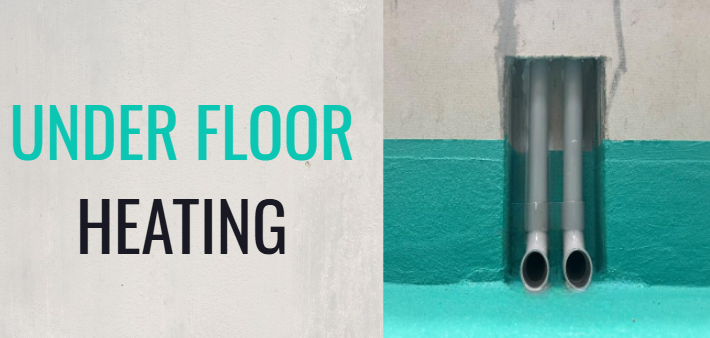
Under floor heating is becoming increasingly popular in modern bathroom and wet area designs. However, if not correctly planned, it can present significant challenges to compliant waterproofing — particularly at the critical wall/floor junction.
Early consideration and correct detailing are essential to avoid waterproofing failures and non-compliance with Australian Standards.
The primary risk with under floor heating systems occurs where heating conduits exit the floor and run up the wall. Traditionally, this has often resulted in penetrations through the wall/floor junction flashing below finished floor height.
Many methods have been used in the past to seal these penetrations, most commonly relying on sealants or caulking. However, these methods are not considered a permanent or compliant solution and significantly increase the risk of future failure.
Australian Standard AS 3740:2021 – Waterproofing of Domestic Wet Areas is clear on this matter.
Under Clause 4.18 – Floor Heating, the Standard states:
Failure to comply with these requirements can result in non-compliant installations, increased defect risk, and potential warranty issues.
To ensure compliance and long-term performance, Wet-seal recommends that under floor heating conduits are accommodated within the wall structure, rather than penetrating the wall/floor junction.
The following methods are considered best practice:
By forming a channel or notch within the wall:
This approach eliminates reliance on sealants and significantly reduces the risk of waterproofing failure.
Correct provision for under floor heating must be considered before waterproofing works commence. Early coordination between the builder, electrician, and waterproofing contractor ensures the wall detailing can be prepared correctly and avoids costly rework or non-compliant outcomes.
Wet-seal strongly recommends that builders and trades plan for under floor heating at the design and rough-in stage to ensure compliance with Australian Standards and best-practice waterproofing outcomes.
Getting the details right early helps protect the structure, reduces defects, and delivers long-term peace of mind. Please speak with your local Franchisee directly. Details of how to contact your local Franchisee can be found at Find A Franchisee
